Bold Moves Match 3 Puzzles
Red Games Co.Word
4.315.30K Reviews
- Version
- 4.4
- Installs
- 1.00M
- Age Rating
- Everyone
Screenshots
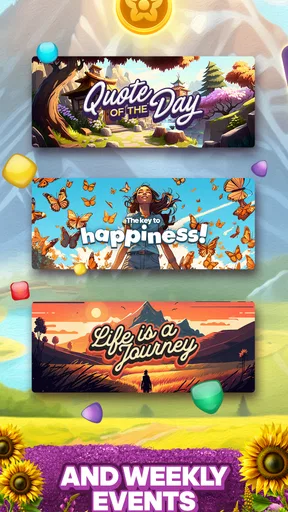
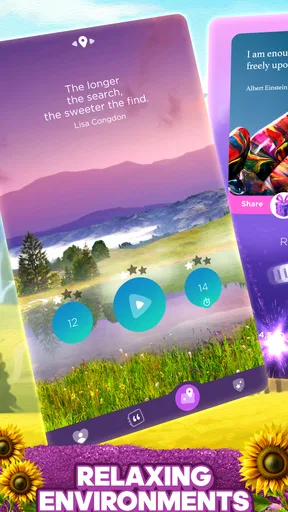
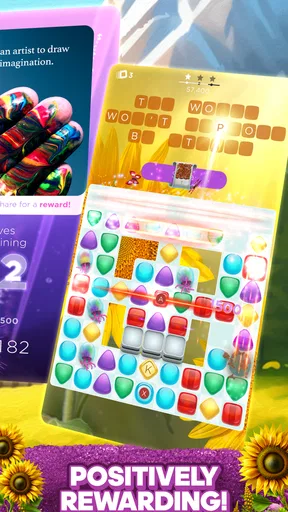
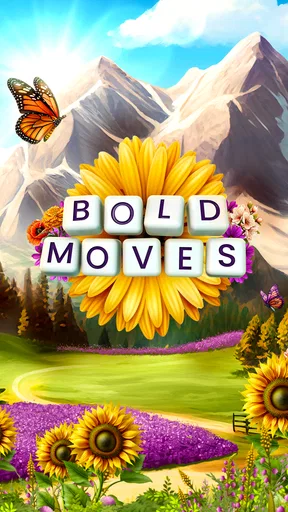
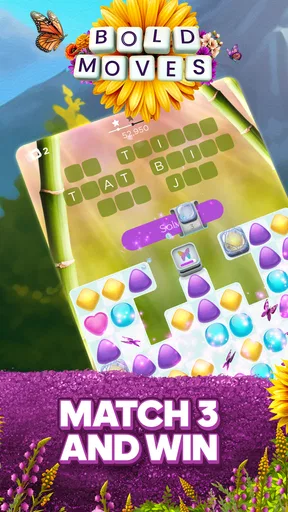
Our Review of Bold Moves Match 3 Puzzles
 Analysis by Appyee
Some word games ask me to slow down and search for the perfect answer, while others push me through quick rounds of matching. Bold Moves sits between those two moods. It is a free word game from Red Games Co. that combines match-three play with short motivational phrases, creating a relaxed loop that is easy to understand but still gives each move a little purpose. After spending time with it, I found that its strongest quality is not raw difficulty. It is the way the colorful presentation, encouraging setting, and steady puzzle rhythm work together.
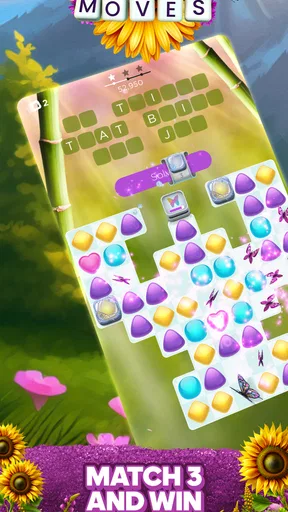
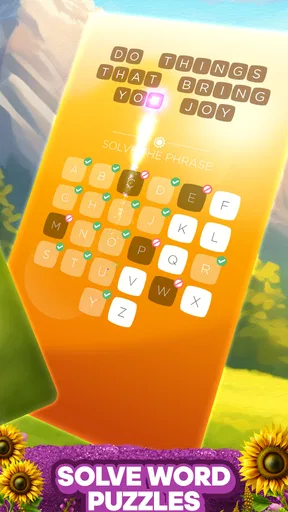
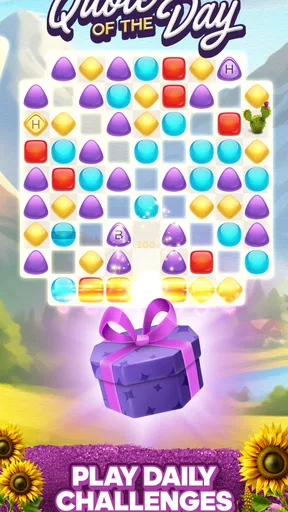
The basic idea is simple: I match pieces, clear space, and work toward completing a phrase. That structure makes the game approachable from the first session, especially for someone who enjoys word puzzles but does not want a traditional crossword or a strict spelling challenge. The phrase-solving layer gives the matching board a destination, so I am not clearing tiles without context. There is always a small sense of progress toward a message.
That combination also explains why the game has reached a broad audience. It is listed as a free title for Everyone, with a 4.3 average from around 44 thousand ratings and more than 1 million installs. Those figures do not make it automatically right for every player, but they do reflect the accessible nature of the design. I can hand it to someone who rarely plays games and explain the central idea quickly.
A gentle first impression with a clear purpose
My first impression was that the game wants to feel uplifting rather than competitive. The visual direction supports that immediately. Instead of presenting the board as a cold grid of interchangeable objects, it frames the activity around collecting and solving encouraging phrases. That gives the opening moments a warmer identity than a standard match-three clone.
The presentation is important because the underlying action is familiar. Matching three or more pieces is a well-established format, and on its own it can become visually interchangeable with many other puzzle games. Here, the phrase objective gives each round a more recognizable personality. I am not only watching pieces disappear; I am waiting to see how the current message develops.
The game is also easy to approach in short sessions. I can play a little while waiting for an appointment, take a break between tasks, or return for a few rounds without needing to remember a complicated story. That convenience is one of its practical strengths. It does not demand that I learn a large cast, memorize a map, or follow a long chain of instructions before the puzzle becomes enjoyable.
At the same time, the accessible opening hints at the main trade-off. Players who want a demanding word workout may find the early experience too gentle. This is not designed like a serious vocabulary trainer, and it does not replace a crossword, an anagram challenge, or a spelling-focused game. Its word element is wrapped inside a casual matching structure, so the pleasure comes from the combination rather than from testing advanced language knowledge.
The title is free to download, although optional in-app purchases range from $0.99 to $99.99 per item. I would keep that in mind if I were installing it for a child or for someone who tends to make impulse purchases in games. The age rating is Everyone, which fits the friendly tone, but an age rating does not remove the need to review purchase settings on a shared device.
Color and setting give the board its identity
The art direction does more than decorate the puzzle. It establishes a visual language built around positivity, movement, and small moments of completion. The board feels like part of an encouraging activity instead of an abstract test. When a match clears, the result contributes to an overall mood of progress, and that mood makes the repeated action easier to return to.
I especially like how the phrase goal changes the way I read the screen. In a conventional match-three game, I tend to scan only for the best immediate match or for a possible chain. Here, I also keep the unfinished wording in mind. That second layer gives the board a little narrative texture without turning the game into a story-heavy experience.
This setting is best understood as emotional framing rather than a detailed fictional world. I would not choose it for elaborate lore, character development, or a richly explained setting. Its world is communicated through the language of motivation and the visual treatment of the puzzles. That is enough to create a recognizable atmosphere, but it remains intentionally light.
One useful way to play is to treat the phrase as a planning reminder instead of merely a reward. Before making a quick match, I look at the available board and consider whether the move helps open the area needed for the current objective. That small habit makes the game feel less automatic. It also prevents me from clearing pieces simply because a match is available when a different move would create a better route toward the phrase.
Another practical tip is to resist making the first obvious move every time. Match-three boards often reward a brief scan, and the phrase target gives me a reason to pause for that scan. I check the edges and the blocked-looking areas first, then decide whether the easy match is actually useful. This does not turn the game into a complex strategy title, but it adds a satisfying amount of intention to otherwise familiar play.
Sound and rhythm keep the mood calm
The audio direction works best when I think of the game as a small reset during the day. The sound supports the act of matching and completing without overwhelming the phrase-solving focus. Rather than making every move feel like a dramatic event, the overall rhythm encourages me to settle into a repeatable pattern: inspect the board, make a match, watch the result, and return to the wording objective.
That pacing matters more than spectacle here. A motivational puzzle can easily become too loud or too frantic if every successful action is treated as a major victory. Bold Moves benefits from a more measured presentation. The atmosphere lets me play while thinking about the next move, and that makes it suitable for casual breaks when I want something interactive but not stressful.
There is a clear difference between this rhythm and the pressure found in timed word games. I do not approach a round with the same nervous urgency I would bring to a countdown-based challenge. The game’s identity comes from steady progress, not from forcing me to type or recognize words at maximum speed. Players who enjoy tension and rapid competition may therefore find the pacing too restrained.
For me, the best everyday scenario is a short evening session after a busy day. I can open the game, play a few boards, and enjoy the combination of colorful movement and encouraging language without committing to a long campaign. It works as a mental transition: active enough to hold my attention, but gentle enough that I do not feel I am starting another demanding task.
The same quality can be a weakness if I am looking for a game with a strong dramatic arc. The sound and visual mood are designed to reinforce consistency, not surprise. Once I understand that, I stop expecting a major tonal shift and judge the experience on whether it makes ordinary puzzle repetition pleasant. In that role, it is more successful.
How the matching and word layers fit together
The mechanical fit is the most important part of the review because the motivational theme would not matter if the board were frustrating or disconnected from the phrase. Fortunately, the two layers belong together. Matching creates the immediate action, while the phrase gives that action a visible reason. I always know what kind of progress I am working toward, even when the individual moves remain simple.
This structure also makes the game easier to recommend to different kinds of casual players. Someone who enjoys match-three puzzles can enter through the board mechanics, while someone who likes short word challenges can appreciate the phrase completion. Neither side has to master a completely separate system. The game stays readable because the matching action remains the foundation.
Still, I would not describe the word component as a replacement for a dedicated word-game experience. The game is not primarily about building a large vocabulary, finding obscure definitions, or proving spelling accuracy under pressure. Its phrases are part of the reward and direction system. If my main goal were language practice, I would choose a title built around definitions, anagrams, or direct word construction instead.
A more subtle strength is that the phrase objective gives me a reason to care about board position. In a basic match-three loop, a move can feel disposable once I have made it. Here, I am more aware of whether the action moves me closer to completing the current message. That makes the game feel slightly more thoughtful than its simple controls suggest.
My advice is to play with patience rather than speed. I look for matches that open useful spaces, preserve future options, or contribute more directly to the current phrase. This is especially helpful when the board offers several tempting moves. The game remains casual, but that extra layer of observation makes the sessions more rewarding and reduces the feeling that I am simply tapping whatever lights up first.
The trade-off is repetition. The central loop remains matching pieces and progressing through phrases, so players who need constant mechanical novelty may lose interest. There is no reason to expect the experience to transform into a different genre halfway through. Its appeal depends on whether the core rhythm remains pleasant after the initial novelty of the presentation fades.
Where it fits among familiar alternatives
Compared with a traditional crossword, this is more visual, more immediate, and less dependent on advanced clues. I do not need to sit with a blank grid and work through a set of definitions. The board gives me something active to do, and the phrase goal keeps the word element approachable. The cost of that accessibility is that I get less depth from the language itself.
Compared with a standard match-three title, the phrase system gives the session a clearer emotional direction. Many matching games rely on scores, level completion, or collectible progression to create motivation. Here, the message being assembled is part of what makes the round feel distinct. I find that especially appealing when I want a positive, low-pressure tone rather than a high-energy challenge.
Compared with a word-search or anagram game, the physical board is the main attraction. I am not scanning a list of letters for hidden combinations or rearranging tiles to form many possible answers. The game asks for a different kind of attention: spatial awareness first, phrase progress second. That makes it a better choice for players who like words but prefer movement and visual feedback.
There is also a practical difference from competitive word games. Bold Moves does not need me to compare my vocabulary with another player in order to be enjoyable. I can use it alone and at my own pace. That makes it suitable for quiet breaks, but it also means that anyone looking for leaderboards, head-to-head pressure, or a strong social contest should consider another option.
Who will enjoy it, and who should skip it
I would recommend this game to casual players who like match-three mechanics but want a little more meaning attached to each round. It is also a good fit for people who enjoy motivational language, colorful presentation, and short sessions that can be stopped easily. Families may appreciate the approachable tone, although I would still manage purchase access on devices used by children.
It is particularly well suited to someone who wants a gentle mental break rather than an intense test. The board encourages observation, but the game does not present itself as a serious academic exercise. I can play while relaxing, during a commute break, or as a way to shift attention away from work without taking on a complicated new world.
I would skip it if I wanted deep word knowledge, difficult clues, or a constantly changing set of mechanics. I would also look elsewhere if I disliked motivational themes or found repeated matching loops boring. The positive atmosphere is central to the experience, not a minor coating that can be ignored.
Device compatibility is another straightforward consideration. The current version is 4.4, and the game requires Android 7.0 or later. That makes checking the operating system worthwhile before trying to install it on an older Android device. On a supported phone, the simple structure should be easy to pick up, but the overall enjoyment still depends more on taste than on technical complexity.
My final take on the playable mood
What stays with me is the coherence between the art direction, the sound, the setting, and the mechanics. None of those elements tries to overpower the others. The colorful board makes matching inviting, the motivational phrases give the activity a purpose, and the calm rhythm keeps the experience from becoming exhausting. The result is a word game that understands it is also a mood game.
That does not make it perfect. The wordplay is lighter than what I would expect from a dedicated vocabulary title, and the familiar matching loop may not hold the attention of players who need constant challenge. Optional purchases are another reason to approach it thoughtfully, especially on a shared device. These limitations are easy to accept when I want a friendly casual puzzle, but they matter if I am searching for depth or competitive intensity.
Red Games Co. has built something approachable around a familiar foundation. I would recommend it to a friend who wants a free, easy-to-learn game with an encouraging tone and enough planning to prevent every move from feeling meaningless. Its real strength is the union of simple matching and phrase-driven progress, not either feature in isolation.
In the end, I see it as a good companion for short, low-pressure sessions. It will not replace a crossword, a serious word trainer, or a competitive puzzle game, and it does not need to. When I want a colorful board, a gentle pace, and a small feeling of forward movement, this is a pleasant choice. The atmosphere gives the familiar mechanics a distinct voice, and that is what makes the experience worth returning to.
Verdict
Strengths of Bold Moves Match 3 Puzzles
- Simple match-3 controls make it easy to start playing immediately.
- Short levels fit well into quick gaming sessions.
- Colorful visuals and animations make matches satisfying.
- Progression introduces new challenges without overwhelming beginners.
- Playable offline, making it convenient during travel or commutes.
Limitations of Bold Moves Match 3 Puzzles
- Some levels can feel dependent on lucky tile combinations.
- Difficulty spikes may require repeated attempts to progress.
- Limited moves make mistakes especially frustrating in harder stages.
- Boosters and extra moves may encourage optional in-app purchases.
- The core match-3 formula can become repetitive over long sessions.
Other Releases by Red Games Co.
View All
Crayola Adult Coloring
Art & Design4.3
Similar Picks in This Category
View All
Word Search - Word Puzzle Game
Bluetile4.8

Word Search Quest - Puzzles
Blackout Lab4.8

CodyCross: Crossword Puzzles
Fanatee, Inc.4.7

Words of Wonders: Crossword
Fugo Games4.9

Wordscapes: Word puzzle game
PeopleFun4.7

Word Search Explorer
PlaySimple Games4.9
Frequently Asked Questions
What is Bold Moves Match 3 Puzzles?
Bold Moves Match 3 Puzzles is a casual puzzle game built around the familiar match-three format. You swap or move colorful pieces to create groups of three or more matching items, clear objectives, and progress through increasingly challenging levels. The game also includes a light adventure-style presentation, making it suitable for short play sessions or relaxed entertainment on Android and iOS devices.
Is Bold Moves Match 3 Puzzles free to download and play?
The game can generally be downloaded and played without an upfront purchase, although optional in-app purchases may be available. These purchases can provide extra moves, boosters, lives, or other helpful resources. Players who prefer not to spend money should review the in-app purchase settings on their device and remember that progress may sometimes be designed around waiting for lives to refill.
Does Bold Moves Match 3 Puzzles require an internet connection?
An internet connection may be needed for the initial download, updates, advertisements, cloud-related features, or in-app purchases. Basic puzzle levels may work offline in some situations, but availability can depend on the version installed and the device being used. For the most reliable experience, especially when saving progress or receiving new content, playing while connected to the internet is recommended.
Is Bold Moves Match 3 Puzzles suitable for children?
Bold Moves Match 3 Puzzles is generally easy to understand because its core gameplay uses simple matching mechanics and does not require complex controls. However, parents should check the recommended age rating, advertising content, and available in-app purchases before allowing younger children to play. Device-level parental controls are also useful for preventing accidental purchases or access to external links.
What devices are compatible with Bold Moves Match 3 Puzzles?
Compatibility depends on the operating system version, available storage, and the specific release offered through the Google Play Store or Apple App Store. Before downloading, check the app’s store listing for supported Android or iOS versions and device requirements. Keeping your phone or tablet updated can improve stability, while older devices may experience slower loading or reduced performance.
Play our best games!


